 Image 1 of 4
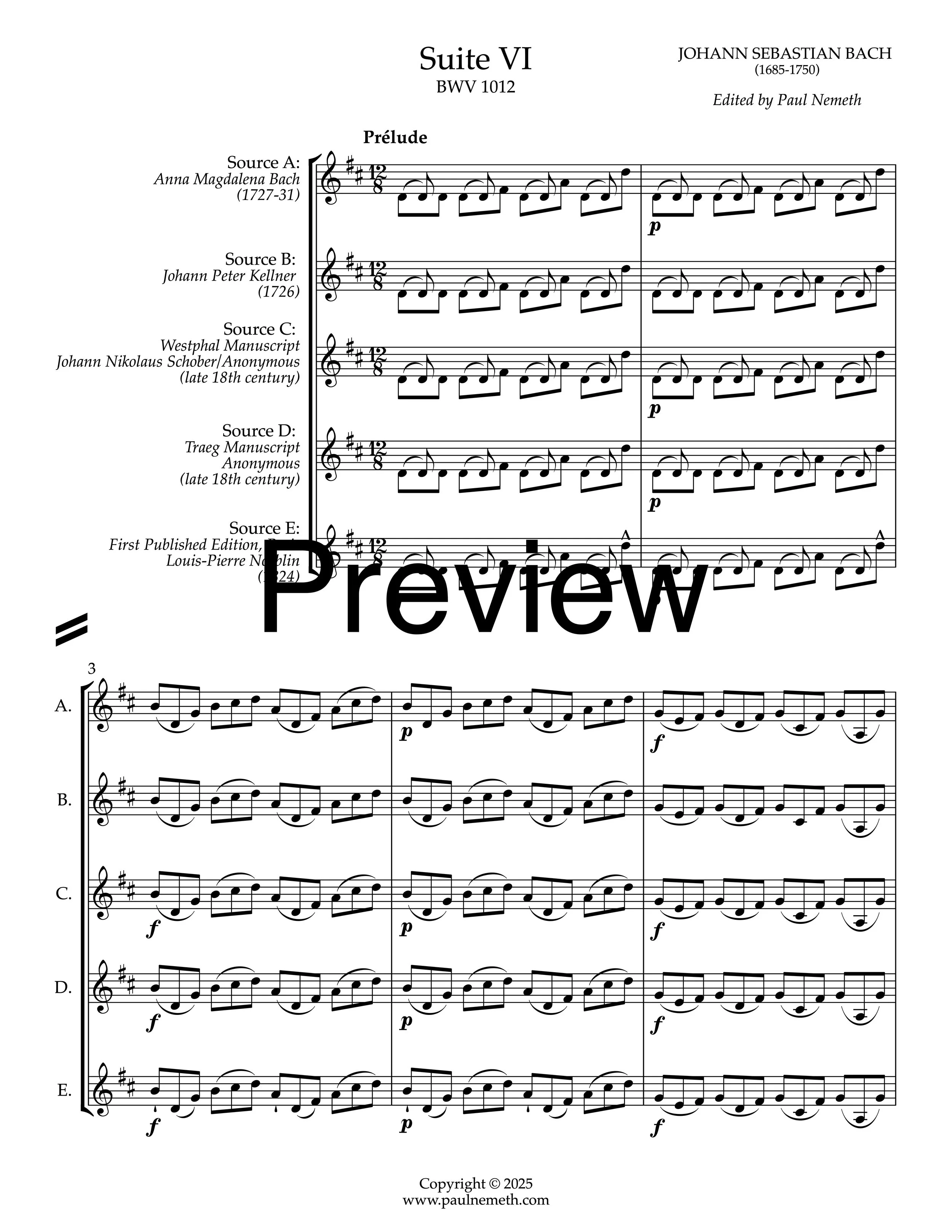 Image 2 of 4
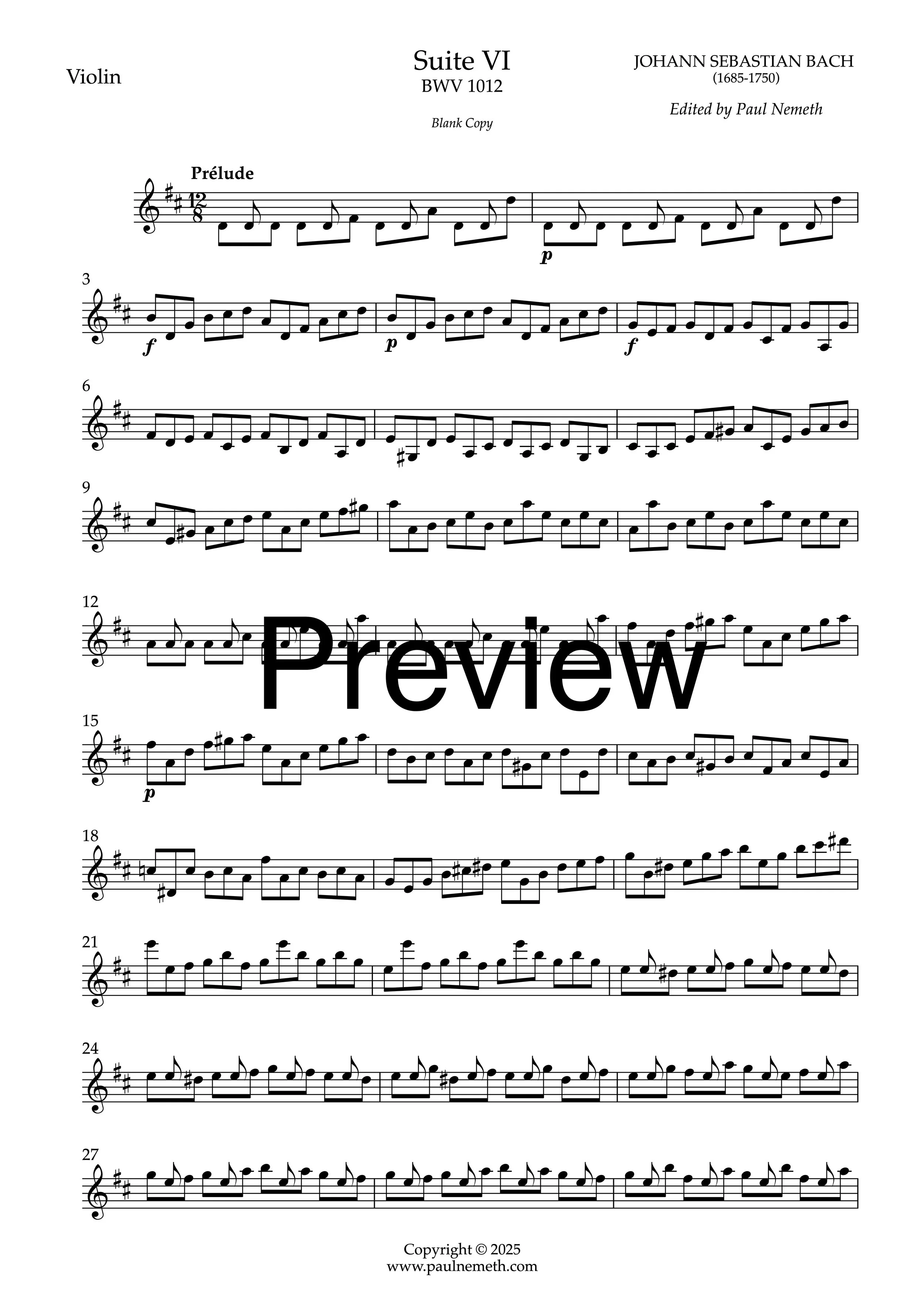 Image 3 of 4
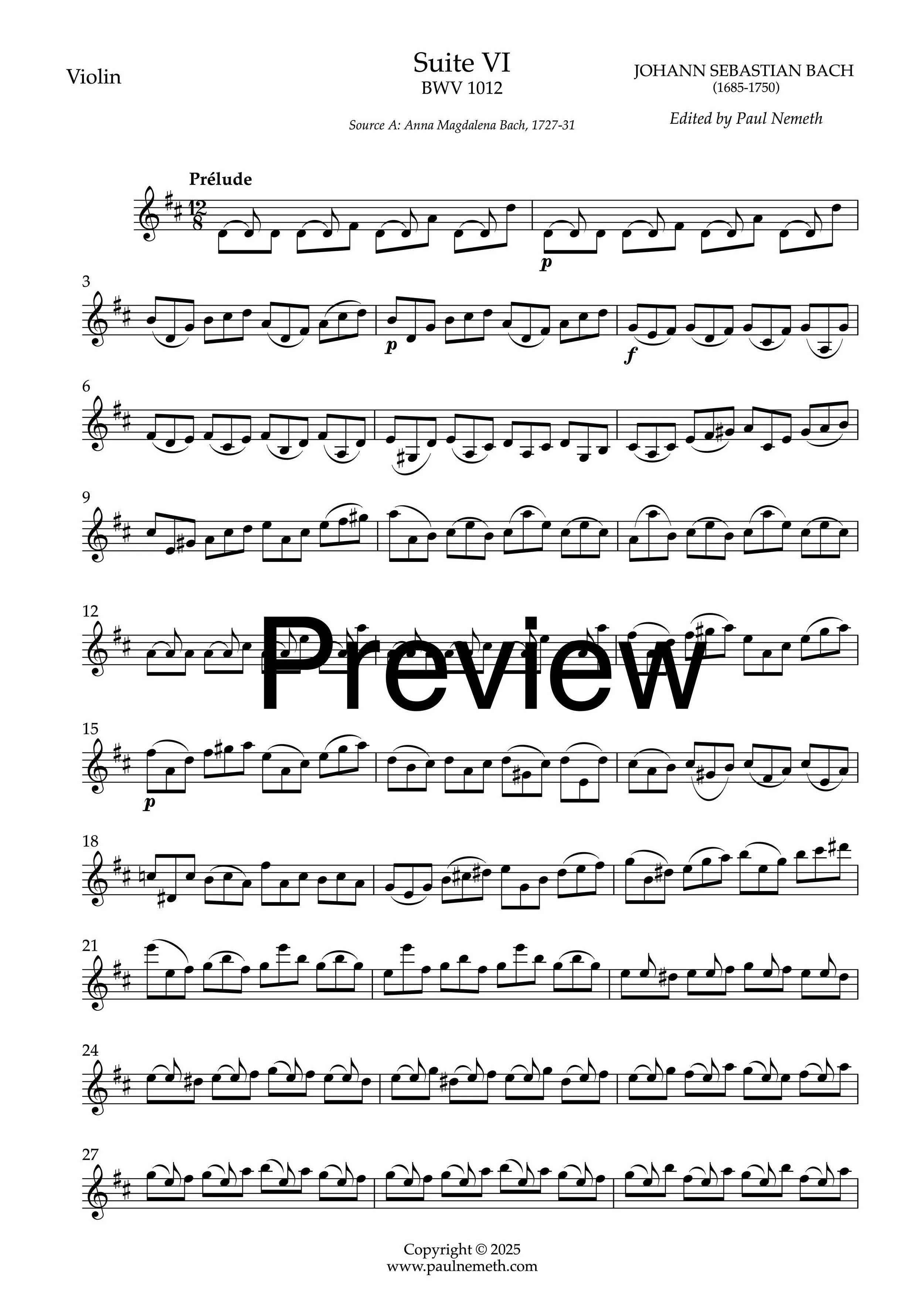 Image 4 of 4
J.S. Bach - Suite IV in D major, transcribed for violin. Contains 8 individual parts for Sources A, B, C, D, E, F, G, and a blank copy, as well a score comparison of Sources A-E. 154 pages in 9 pdfs, available as a download: 53 pages of score and 101 pages of individual parts.
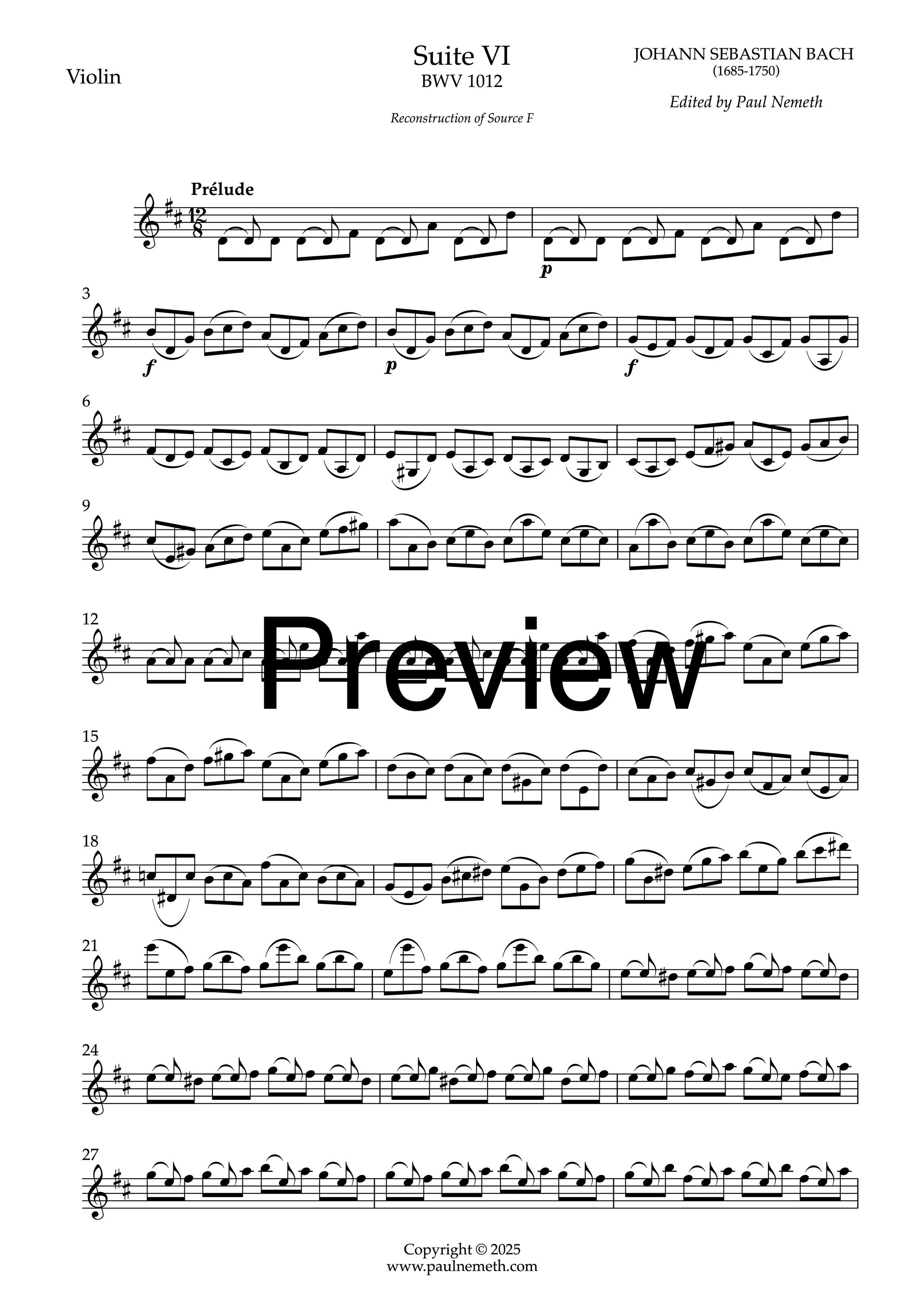
These transcriptions of J.S. Bach’s cello suites for violin try to answer this question: what would a comprehensive edition of these works look if it were made for the violin? The answer to that question has lead me to make an edition that reproduces the markings from 5 sources (Sources A through E), which in turn have been used to reconstruct two sets of bowings that presumably came from Bach’s own hand (the lost Sources F and G). Also included is a score that compares Sources A through E against each other, as well as a blank copy that has no markings.
The choice of keys to be used on the violin are up a 5th for each suite (with the exception of the 6th suite). This mimics the idea of playing these pieces in the same general positions as they would on cello or viola, but with each string shifted up to accommodate the high E string.
The manuscripts that exist are copies themselves, made from Bach’s original sources, and by themselves, their accuracy is inconsistent and unreliable to performers. An Urtext edition of these works could never exist under these circumstances, but this edition gives enough information and flexibility to the performer to make their own informed decisions about how to approach performing these pieces on the violin.
J.S. Bach - Suite IV in D major, transcribed for violin. Contains 8 individual parts for Sources A, B, C, D, E, F, G, and a blank copy, as well a score comparison of Sources A-E. 154 pages in 9 pdfs, available as a download: 53 pages of score and 101 pages of individual parts.
These transcriptions of J.S. Bach’s cello suites for violin try to answer this question: what would a comprehensive edition of these works look if it were made for the violin? The answer to that question has lead me to make an edition that reproduces the markings from 5 sources (Sources A through E), which in turn have been used to reconstruct two sets of bowings that presumably came from Bach’s own hand (the lost Sources F and G). Also included is a score that compares Sources A through E against each other, as well as a blank copy that has no markings.
The choice of keys to be used on the violin are up a 5th for each suite (with the exception of the 6th suite). This mimics the idea of playing these pieces in the same general positions as they would on cello or viola, but with each string shifted up to accommodate the high E string.
The manuscripts that exist are copies themselves, made from Bach’s original sources, and by themselves, their accuracy is inconsistent and unreliable to performers. An Urtext edition of these works could never exist under these circumstances, but this edition gives enough information and flexibility to the performer to make their own informed decisions about how to approach performing these pieces on the violin.